Dave Ramsey and reverse mortgages: a claim-by-claim fact check Dave Ramsey calls reverse mortgages a rip-off. I checked his claims against the rules.
Ramsey’s advice is built for people who still have time to save. Many California homeowners in their 70s and 80s don’t. Below is each claim from Ramsey Solutions’ reverse mortgage article with a verdict and the federal rule or published research behind it, then what retirement researchers say about Ramsey’s own retirement math.
Ramsey’s pages checked October 6, 2026. I’m a reverse mortgage broker, so I have an interest in this question. That’s why every verdict cites something you can check yourself.
The short version: three of Ramsey’s reverse mortgage claims are false under current federal rules: that non-recourse protection is “a complete lie,” that a higher-value home can’t qualify, and that you “sell off your equity.” Four more leave out facts that change the answer, including what your heirs actually face. He’s right that costs are real and that a reverse mortgage isn’t for everyone. And on retirement income, the researchers who study it for a living have rejected his advice publicly, by name, with data.
Ten Ramsey claims, checked
Every quote is copied from Ramsey Solutions’ own pages, linked, as they read on October 6, 2026. Each one gets a red X and one of four labels.
- False
- Wrong under current federal law or HUD rules.
- Misleading
- Contains some truth but leaves out facts that change the answer.
- Outdated
- Closer to true before HUD changed the rules.
- Opinion
- A judgment, not a checkable fact. Here’s why I disagree.
10 claims checked: 3 false4 misleading1 outdated2 opinion
| Ramsey says | Verdict | The facts |
|---|---|---|
Ramsey quotes the industry’s promise You will never owe more than your home is worth!and answers: That is a complete lie.“What Is a Reverse Mortgage?”, updated March 17, 2025. His elder fraud page adds that loved ones could also end up owing more on their home than it’s worth. | Verdict: False | It’s federal law. Every FHA-insured reverse mortgage is non-recourse: when the loan is repaid, neither you nor your heirs owe more than the home is worth, and FHA insurance covers any shortfall. The balance can grow past the home’s value on paper. The bill can’t.Source: 24 CFR Part 206 (§206.125) |
They won’t let you qualify if your home is worth more than a certain amount.“What Is a Reverse Mortgage?”, updated March 17, 2025. | Verdict: False | Home value doesn’t disqualify anyone. HUD caps the value used to calculate the loan, $1,249,125 for 2026, so a $3 million home can still qualify, with its loan figured on that amount. Owners of higher-value homes can also look at a proprietary jumbo reverse mortgage, which is not FHA-insured.Source: HUD Mortgagee Letter 2025-22 |
With this type of mortgage, you sell off your equity—the part you own—for cash.“Types of Mortgage Loans”, Ramsey Solutions. | Verdict: False | Nothing is sold. A reverse mortgage is a loan secured by your home. You keep the title, you keep living there as long as you meet the loan terms, and any equity left when the loan is repaid belongs to you or your heirs.Source: 24 CFR Part 206; HUD |
Your family will have two options: Pay back the entire amount you owe, or give up your home to the bank.“What Is a Reverse Mortgage?”, updated March 17, 2025. | Verdict: Misleading | Heirs have more choices, and more protection, than that. They can sell the home and keep whatever equity is left; keep it by paying off or refinancing the loan for the lesser of the balance or 95% of the appraised value; or hand over the keys and owe nothing more. They get 30 days to respond and up to six months to sell or refinance, and the servicer can grant up to two 90-day extensions. More in the guide for adult children, and for heirs who want to keep the house, in how heirs keep it. And measured on the whole estate rather than the house alone, heirs can come out ahead: in one published example the loan balance reached $633,784 and the heirs still received $183,670 more in total, because the investments were spared a large withdrawal right after a market slump (the research).Source: 24 CFR §206.125; HUD Handbook 4000.1 |
a hefty mortgage insurance premium that protects the lender (not you)“What Is a Reverse Mortgage?”, updated March 17, 2025. | Verdict: Misleading | The FHA premium (2% of the home value up front, up to the FHA limit, plus 0.5% a year on the balance) pays for the guarantee that makes the loan non-recourse for you and your heirs, and it backs your access to unused funds if a lender fails. It protects the lender and you.Source: HUD Mortgagee Letter 2017-12; 24 CFR Part 206 |
Here’s a spoiler: You’ll lose your home. Plain and simple.“What Is a Reverse Mortgage?”, updated March 17, 2025. | Verdict: Misleading | Any homeowner, mortgage or not, can lose a home over unpaid property taxes. A reverse mortgage removes the required monthly mortgage payment, and since 2015 HUD has required a financial assessment before closing and, where needed, a set-aside from the loan to pay property taxes and insurance. You still have to keep up taxes, insurance and maintenance. The loan comes due after 12 straight months in a care facility, and an eligible non-borrowing spouse can stay in the home.Source: 24 CFR §206.37 and §206.205 (HUD final rule, January 19, 2017); HUD Mortgagee Letters 2014-07 and 2021-11 |
a bunch of ridiculous fees… close to $10,000“What Is a Reverse Mortgage?”, updated March 17, 2025. | Verdict: Misleading | Costs are real, and on many California homes they run higher than his figure, because the FHA premium alone is 2% of the home value, up to the FHA limit. What he leaves out: HUD caps the origination fee, most costs are paid from the loan rather than out of pocket, and his alternative, selling the house, usually costs more. See the comparison below.Source: 24 CFR §206.31; HUD Mortgagee Letter 2017-12 |
Reverse mortgages are major rip-offs.… nothing more than a predatory program designed to take advantage of you“What Is a Reverse Mortgage?”, updated March 17, 2025. | Verdict: Opinion | That’s a judgment, so here’s why I disagree. Congress created this program, FHA insures it, HUD caps the origination fee, and no one can apply before meeting with an independent HUD-approved counselor. Nor is it being pushed on anyone: 24,182 FHA reverse mortgages were insured nationwide in fiscal 2026, against $14.92 trillion in home equity held by Americans 62 and older. Even Ramsey’s article concedes most lenders are legit.Source: HUD data via HECMWorld, October 2, 2026; NRMLA/RiskSpan, first quarter 2026 |
Using a reverse mortgage to pay off a regular mortgage is just nuts!“What Is a Reverse Mortgage?”, updated March 17, 2025. | Verdict: Opinion | For a retiree on a fixed income, trading a required monthly mortgage payment for no required payment is often what keeps them in the house. HUD’s rules build this use in: paying off the existing mortgage is a “mandatory obligation” the loan covers at closing. Property taxes, insurance and upkeep still have to be paid.Source: 24 CFR §206.25 |
Earlier Ramsey material: Over 100,000 reverse mortgages have failed, resulting in foreclosures and evictions.As quoted by Movement Mortgage, February 28, 2024, and by Fairway’s Harlan Accola on Nasdaq, August 30, 2021. | Verdict: Outdated | That figure dates from the years after the 2008 housing crash. Reverse mortgage educator Dan Hultquist and Harlan Accola both point out that these were not failures of the product: many were routine payoffs after a borrower died or moved, and many of the rest were property-tax and insurance defaults, the exact problem HUD’s 2015 financial assessment and set-aside rules were written to prevent.Source: Movement Mortgage; Nasdaq; 24 CFR §206.205 |
You can’t go back to 1985 and save more
Ramsey’s plan of budgeting, saving and paying off the house works when you have decades. For a couple in their 80s whose problem is this month’s bills, “you should have saved more” is true and no help at all. Here’s the retirement many people actually face:
15.4%
of Americans 65 and older were in poverty in 2025 under the Census Bureau’s Supplemental Poverty Measure, up from 9.4% in 2020.
46%
of retirees stopped working earlier than they planned. Health problems were the most common reason.
29.1%
average rate increase for California FAIR Plan homeowners, effective October 15, 2026.
$14.92 trillion
in home equity held by Americans 62 and older, a record.
For many of them, the paid-off house Ramsey told them to build is now their largest asset. His answer for using it is to sell it. A reverse mortgage is a way to use it without moving out.
The cost question, honestly
Ramsey is right that a reverse mortgage costs money. The fair question is: compared to what? His recommended alternative is to sell the house and downsize.
| Item | Reverse mortgage (HECM) | Selling and moving (Ramsey’s alternative) |
|---|---|---|
| Upfront costs | FHA premium of 2% of the home value (up to the FHA limit), a HUD-capped origination fee, and third-party closing costs | Agent commissions averaged 5.46% of the price nationally in August 2026, plus escrow, transfer taxes, repairs and concessions |
| How they’re paid | Mostly from the loan, not out of pocket | From the sale proceeds |
| Moving | None. You stay | Movers, plus the next home’s costs or rent |
| Your home | You keep the title | Sold |
| Taxes on the house | Borrowing is not a sale | A sale can trigger capital gains tax above the $250,000 / $500,000 exclusion. Ask your tax advisor |
| Afterward | No required monthly mortgage payment; property taxes, insurance, HOA dues and upkeep continue | Depends on the next home or rent |
Ramsey’s own downsizing math leaves out the agent
His article describes selling a $350,000 home with $250,000 in equity, buying a $225,000 home for cash, and having $25,000 left over
. At the August 2026 national average commission of 5.46%, the agents alone would take about $19,000 of that, before escrow, repairs, a mover, or the new home’s closing costs.
To be fair to Ramsey: if your heirs sell the house later, they’ll pay a commission then. The difference is that you got to stay home in the meantime. For every cost category, line by line, see what a reverse mortgage costs.
Where Ramsey has a point
Costs are real
Upfront costs on a California home can exceed his estimate. Any honest broker should show you every line, in writing, before you decide.
It isn’t for everyone
If you’re debt-free and your income comfortably covers your life, you may not need one. Ramsey and I agree on that.
Bad actors exist
Check anyone you talk to on NMLS Consumer Access and with the California Department of Real Estate, and walk away from anyone who pushes you to put loan money into an annuity or an investment.
His debt advice works for many people
Even Michael Kitces, who documents Ramsey’s math errors, credits the debt snowball with “real-world/behavioral wisdom,” and a 2012 Northwestern University study (Gal and McShane, Journal of Marketing Research) found people who paid off small debts first were more likely to clear all of their debt.
A paid-off home is a fine goal. But a paid-off home doesn’t pay the electric bill, and a reverse mortgage is one of the few ways to use the equity Ramsey told you to build without moving out.
On retirement income, the experts say Ramsey is the risky one
In November 2023, Ramsey told his audience that withdrawing 8% a year from an all-stock portfolio is safe, based on an assumed 12% average return. The researchers who study retirement income for a living answered by name, with data. For context, Bill Bengen, who created the 4% rule, puts the worst-case safe rate at 4.7% in his 2025 book A Richer Retirement, and Morningstar’s December 2025 research puts a safe starting rate at 3.9%.
“An 8% withdrawal rate in retirement, as recommended by Dave Ramsey, will almost guarantee that you run out of money.”
November 12, 2023
“I think that eight percent, though, is just a step too far.”
January 25, 2024
“There is such a thing as a sequence of returns. That you don’t get 12% return per year on stocks.”
January 25, 2024
More from the people who study this for a living
“This type of strategy, doing 100% equity, assuming an 8% withdrawal rate, is very, very dangerous for retirees.”
Brian Preston, CFP®, and Bo Hanson, CFA, CFP®, The Money Guy Show, 2023
“Dave saying that an 8% withdrawal rate is sustainable over the long term just does not line up with the data.”
The Money Guy Show, 2023
“Rigidly using an 8% withdrawal rate is rash, because doing so would historically have bankrupted retirees before 20 years had elapsed on one third of occasions.”
Morningstar, “What Dave Ramsey and Suze Orman Can (and Cannot) Accomplish”
“He is suggesting a very risky approach to retirement income, and not all his listeners will understand the risks they are taking with an 8% withdrawal on a 100% stocks portfolio.”
Wade Pfau, PhD, CFA, RICP®, as reported by ThinkAdvisor, November 2023
“We’ve really had the foundation at this point to know for at least 30 years that that’s not really a statement that makes any sense.”
Wade Pfau, Rational Reminder podcast, January 25, 2024
“It was just a great opportunity to educate people on why Dave was wrong because he was so wrong about so many different things.”
Ben Felix, CFA, CFP®, PWL Capital, Rational Reminder podcast, January 25, 2024
“The problem with this is so basic that it’s hard to believe Dave Ramsey is ignorant about it.”
McLean Asset Management, “Dave Ramsey’s 8% Withdrawal Rate”
“Anyone following Ramsey’s retirement withdrawal strategy is doomed.”
Ric Edelman, founder of Edelman Financial Engines, as reported by Benzinga, June 2024
“Ramsey does give empirically minded critics a lot of ammunition.”
Michael Kitces, CFP®, Kitces.com, in an article that also credits Ramsey’s debt advice
“But over time most active managers underperform compared to passively managed index funds after expenses.”
The Motley Fool, “4 Things Dave Ramsey Gets Wrong About Investing,” September 15, 2020, on his actively managed fund advice
Supernerds Unite Against Dave Ramsey’s 8% Safe Withdrawal Rate Guidance
A joint rebuttal by David Blanchett, PhD, CFA, CFP®; Michael Finke; and Wade Pfau. ThinkAdvisor, November 13, 2023
Dave Ramsey’s 8% Withdrawal Advice Could Lead to Ruin
Peter Mallouk, CFP®, chief executive of Creative Planning. ThinkAdvisor, December 11, 2023
What Ramsey said back
- Called his critics
goober supernerds
. (as reported by The American College of Financial Services, March 18, 2024) - Said settling for 4% is
stupid
and that its advocates aremorons
. (as reported by Morningstar) stupid people put out low withdrawal rates
(transcribed by PortfolioCharts, November 10, 2023)- Called the 4% rule
hope stealing
. (as reported by 24/7 Wall St., July 2, 2026)
The critics quoted here
PhD economists, Chartered Financial Analysts and Certified Financial Planner professionals, including a distinguished chair at The American College of Financial Services and the leaders of national advisory firms.
CFP® means Certified Financial Planner professional; CFA means Chartered Financial Analyst; RICP® means Retirement Income Certified Professional.
Dave Ramsey
A bachelor’s degree in finance and real estate from the University of Tennessee, 1982. His public biography lists no professional financial designation, and his company describes itself, in disclosures its SmartVestor advisors publish, as “a paid, non-client promoter of SmartVestor Pros” that “is not an investment advisor.”
Ramsey’s 8% advice isn’t about reverse mortgages. It matters here because it’s the same voice telling retirees which tools are too risky to use.
Researchers stopped calling it a last resort more than a decade ago
The same research community that rejects Ramsey’s 8% rule has studied reverse mortgages for years. Much of that work points the opposite way from Ramsey: set up early and used with a plan, a reverse mortgage line of credit can help retirement savings last longer.
“Conventional wisdom hurts retirement sustainability: HECM shouldn’t be last resort”
Wade Pfau, PhD, CFA, RICP®, presentation to the National Reverse Mortgage Lenders Association, 2015
“Approximately nine years ago, ‘the conventional wisdom’ was reversed by two papers published in this Journal.”
Barry H. Sacks, J.D., Ph.D., Journal of Financial Planning, Financial Planning Association. Sacks also recounts that in 2013 the Financial Industry Regulatory Authority (FINRA) removed language from an investor alert saying a reverse mortgage should be used only as a last resort.
“In isolation, reverse mortgages can look expensive… But reverse mortgages should not be viewed in isolation.”
Wade Pfau, PhD, CFA, RICP®, Advisor Perspectives, April 15, 2019. In his example the loan balance reached $633,784 and the heirs still ended up $183,670 ahead.
The research behind it
- Sacks and Sacks, “Reversing the Conventional Wisdom: Using Home Equity to Supplement Retirement Income,” Journal of Financial Planning, February 2012.
- Salter, Pfeiffer and Evensky, “Standby Reverse Mortgages: A Risk Management Tool for Retirement Distributions,” Journal of Financial Planning, August 2012.
- Pfeiffer, Salter and Evensky, “Increasing the Sustainable Withdrawal Rate Using the Standby Reverse Mortgage,” Journal of Financial Planning, 2013.
- Pfeiffer, Schaal and Salter, “HECM Reverse Mortgages: Now or Last Resort?” Journal of Financial Planning, 2014.
- Pfau, “Incorporating Home Equity into a Retirement Income Strategy”, Journal of Financial Planning, April 2016.
- Pfau, “What the Critics Get Wrong About Reverse Mortgages”, Advisor Perspectives, April 2019.
- Moulton and others, “Reverse Mortgage Motivations and Outcomes”, HUD Cityscape, 2017.
Not every respected voice is a fan, and you should hear the cautions too. The Consumer Financial Protection Bureau warned in 2017 that using a reverse mortgage to delay Social Security often costs more than it gains, and the National Consumer Law Center has documented servicing problems. Those are reasons to get independent counseling and a careful plan. They aren’t reasons to rule the product out for everyone. Both sides of the Social Security question are laid out on the Social Security page, and the studies’ actual numbers, with their assumptions, are on the research page.
Ramsey’s advice comes with a referral network
Ramsey’s reverse mortgage article doesn’t just warn you away. As of October 6, 2026, it also carries an ad for Ramsey’s own mortgage referral service and a pitch for its SmartVestor investment-advisor program, and it recommends selling your house through a RamseyTrusted real estate agent.
SmartVestor advisors pay to be listed
One participating firm’s required disclosure lists “a flat monthly membership fee of $400 and a flat monthly territory fee of $700” and calls the arrangement “a material conflict of interest” (Compass Financial Group). Another firm’s disclosure says its advisors “pay SmartVestor cash compensation for these referrals” (Advantage Investment Services).
RamseyTrusted agents share their commissions
Ramsey’s help center says the service is free to you and that agents “earn a commission.” Independent reviews by Clever Real Estate, SmartAsset and RealEstateWitch report that agents pay Ramsey Solutions an upfront fee, monthly fees and a share of each closed commission. When the advice to a house-rich retiree is “sell the house,” you can weigh that for yourself.
One endorsement is in court
In Patrick v. Ramsey (U.S. District Court, Western District of Washington, No. 2:23-cv-00630-JLR), 17 of his listeners allege Ramsey was paid more than $30 million from 2015 to 2021 to promote a timeshare-exit company that, they say, did not deliver what it promised. They seek more than $150 million. In November 2025 the Ninth Circuit Court of Appeals upheld the denial of Ramsey’s request to move the case to arbitration, and a January 2026 schedule sets class-certification motions for March 2027.
These are allegations. No court has decided whether they are true. Sources: CBS MoneyWatch; Open Class Actions, June 29, 2026.
Is a reverse mortgage right for you?
Often a good fit
- Homeowners 62 and older who want to stay put and are struggling with a mortgage payment or rising costs.
- Retirees who need money for in-home care, medical bills or repairs.
- A widow or widower who lost a Social Security check but not the bills.
- Buyers 62 and older who want to downsize without a new mortgage payment, using a HECM for Purchase.
- Financially secure retirees who, with their own financial and tax advisors, want a standby line of credit as a reserve for bad markets or care costs. How planners use one.
Probably not a fit
- Anyone planning to move within a few years.
- Anyone who can’t keep up with property taxes, insurance and upkeep.
- Families where someone not on the loan must keep living in the home and can’t buy or refinance it.
- Retirees whose income and savings comfortably cover their lives, including care costs and a bad decade in the markets, and who don’t want a standby reserve.
I’ve worked with financially secure clients who used a reverse mortgage to supplement their retirement income as part of a plan built with their own advisors. Loan proceeds may be used for any lawful purpose. I don’t sell investments, annuities or insurance, and I don’t give investment or tax advice.
Every FHA-insured reverse mortgage starts with a meeting with an independent HUD-approved counselor, and in California seven days must pass after counseling before the application is final. You must live in the home, pay property taxes, homeowner’s insurance and any HOA dues, and maintain the home; if you don’t, the loan can become due. See who qualifies or run the reverse mortgage calculator.
Questions people ask about Dave Ramsey and reverse mortgages
Why does Dave Ramsey oppose reverse mortgages?
His whole system treats debt as the enemy, and a reverse mortgage is a loan. His company doesn’t take the category as an advertiser either: Ramsey’s published guidelines for radio affiliates list Reverse Mortgage
among the categories to stay away from. His article recommends selling the house through his RamseyTrusted agent network instead.
Can you owe more than your home is worth with a reverse mortgage?
The balance can grow past the home’s value, but on an FHA-insured reverse mortgage neither you nor your heirs will be billed for the difference. That’s the non-recourse rule in 24 CFR Part 206, and FHA insurance pays the gap. Proprietary jumbo loans set their own terms in the loan documents.
What happens to a reverse mortgage when the owner dies?
The loan comes due. Heirs can sell and keep any equity left, keep the home by paying off or refinancing for the lesser of the balance or 95% of the appraised value, or hand over the keys and owe nothing more. They have 30 days to respond and up to six months to sell or refinance, with up to two 90-day extensions. The guide for adult children walks through it.
Is there a home value limit for a reverse mortgage?
Not for qualifying. For 2026 HUD caps the value used to calculate an FHA-insured reverse mortgage at $1,249,125; a more expensive home still qualifies, with its loan figured on that amount. A proprietary jumbo reverse mortgage can go higher.
Is Dave Ramsey a licensed financial advisor or a Certified Financial Planner?
His public biography lists a bachelor’s degree in finance and real estate from the University of Tennessee and no professional financial designation, and his company says in its SmartVestor disclosures that it is not an investment advisor. You can look anyone up with the CFP Board’s verification tool and FINRA BrokerCheck.
Is Dave Ramsey’s 8% withdrawal rule safe?
The research says no. The Money Guy Show’s testing put an inflation-adjusted 8% withdrawal at roughly a 25% to 45% chance of lasting 30 years, and Karsten Jeske’s simulations found failure rates of about 56% to 61%. Bill Bengen, who created the 4% rule, puts the worst-case safe rate at 4.7% in his 2025 book A Richer Retirement. More above.
Does Dave Ramsey get paid by the professionals he recommends?
Yes, by his company’s own disclosures. SmartVestor advisors pay Ramsey Solutions monthly fees, and independent reviews report that RamseyTrusted real estate agents pay a share of their commissions. Details and sources above.
Is Ramsey wrong about everything?
No. His debt-payoff advice works for a lot of people, a paid-off home is a fine goal, and he’s right to warn about scams and costs. His blind spot is the homeowner who no longer has time to follow his plan.
Every source on this page, with links and dates
Ramsey’s own pages (as they read on October 6, 2026)
- Ramsey Solutions, “What Is a Reverse Mortgage?” published August 6, 2024, updated March 17, 2025
- Ramsey Solutions, “Types of Mortgage Loans”
- Ramsey Solutions, “Elder Fraud: How to Protect Seniors From Scams”
- Ramsey Solutions, “Local Endorsement Guidelines for Radio Affiliates”
- RamseyTrusted help center, “Do I Have to Pay to Use a RamseyTrusted Real Estate Pro?”
- Ramsey Solutions, “Dave Ramsey, Founder and CEO”
- University of Tennessee, “Our Tennessee: Dave Ramsey” (2017)
Federal rules
- 24 CFR Part 206, Home Equity Conversion Mortgage Insurance (including §206.25, §206.37, §206.125, §206.205)
- 24 CFR §206.31, allowable charges and fees (origination fee cap)
- HUD final rule, Federal Register, January 19, 2017 (82 FR 7094)
- HUD Mortgagee Letter 2025-22, 2026 maximum claim amount
- HUD Mortgagee Letter 2014-07, non-borrowing spouses
- HUD Mortgagee Letter 2021-11, non-borrowing spouses
- HUD, Home Equity Conversion Mortgages for Consumers
Data
- U.S. Census Bureau, Poverty in the United States: 2025 (P60-290), September 15, 2026
- AARP Foundation statement on the 2025 Census poverty data, September 15, 2026
- EBRI and Greenwald Research, 2026 Retirement Confidence Survey
- KQED, California FAIR Plan rate increase, August 11, 2026
- NRMLA/RiskSpan Reverse Mortgage Market Index, first quarter 2026, released July 20, 2026
- HECMWorld, fiscal 2026 HECM endorsements from HUD data, October 2, 2026
- Clever Real Estate, average real estate commission survey, August 2026
- TheStreet on Morningstar’s December 2025 safe withdrawal research
Researchers and critics
- Karsten Jeske, Early Retirement Now, November 12, 2023
- Rational Reminder podcast, episode 289, January 25, 2024 (Wade Pfau, Michael Finke, Ben Felix)
- ThinkAdvisor, November 13, 2023 (Blanchett, Finke, Pfau)
- ThinkAdvisor, December 11, 2023 (Peter Mallouk)
- The Money Guy Show, reaction to the 8% withdrawal rate
- Morningstar, “What Dave Ramsey and Suze Orman Can (and Cannot) Accomplish”
- McLean Asset Management, “Dave Ramsey’s 8% Withdrawal Rate”
- Michael Kitces, “The Behavioral Ingenuity of Dave Ramsey’s Advice”
- Benzinga, June 2024 (Ric Edelman)
- PortfolioCharts, November 10, 2023
- The American College of Financial Services, “Shares: Dave Ramsey’s Bad Math,” March 18, 2024
- 24/7 Wall St., July 2, 2026
- The Motley Fool, September 15, 2020
- Barry H. Sacks, Financial Planning Association, on home equity as a non-correlated asset
- Wade Pfau, “Fitting Home Equity into a Retirement Income Strategy,” NRMLA, 2015
- Moulton and others, “Reverse Mortgage Motivations and Outcomes,” HUD Cityscape, 2017
- Dan Hultquist, Movement Mortgage, February 28, 2024
- Harlan Accola, Nasdaq, August 30, 2021
Referral disclosures and court records
- Compass Financial Group, SmartVestor Pro disclosure
- Advantage Investment Services, SmartVestor Pro disclosure (LPL Financial)
- Clever Real Estate, review of RamseyTrusted agents
- SmartAsset, “What Is an Endorsed Local Provider (ELP)?”
- RealEstateWitch, review of RamseyTrusted agents
- U.S. Court of Appeals for the Ninth Circuit, Patrick v. Ramsey, Nos. 24-5710 and 24-5711, November 12, 2025
- CBS MoneyWatch report on the Patrick v. Ramsey complaint
- Open Class Actions, case status, June 29, 2026
Also cited without a link: Sacks and Sacks (2012), Salter, Pfeiffer and Evensky (2012), Pfeiffer, Salter and Evensky (2013), and Pfeiffer, Schaal and Salter (2014), all in the Journal of Financial Planning; Gal and McShane (2012), Journal of Marketing Research; HUD Mortgagee Letter 2017-12; HUD Handbook 4000.1; Bill Bengen, A Richer Retirement (2025); the Consumer Financial Protection Bureau’s August 2017 issue brief on reverse mortgages and Social Security; and the National Consumer Law Center’s 2023 report on reverse mortgage foreclosures.
Ideal Financial, Inc. is not affiliated with, endorsed by, or sponsored by Dave Ramsey, Ramsey Solutions or The Lampo Group. The researchers and commentators quoted on this page are not affiliated with Ideal Financial, Inc. and have not reviewed or endorsed it. “Dave Ramsey,” “Ramsey Solutions,” “The Ramsey Show,” “RamseyTrusted” and “SmartVestor” are trademarks of their respective owners, used here only to identify the source of the statements discussed. Quotations are reproduced as published on the dates shown, for commentary and criticism. The researchers and professionals quoted here do not endorse Ideal Financial or me. The verdicts are my opinions based on the cited rules and research. Court matters are described as alleged in court filings and news reports; no court has ruled on the merits. This page is general information, not legal, tax or investment advice. Last checked against its sources October 6, 2026.
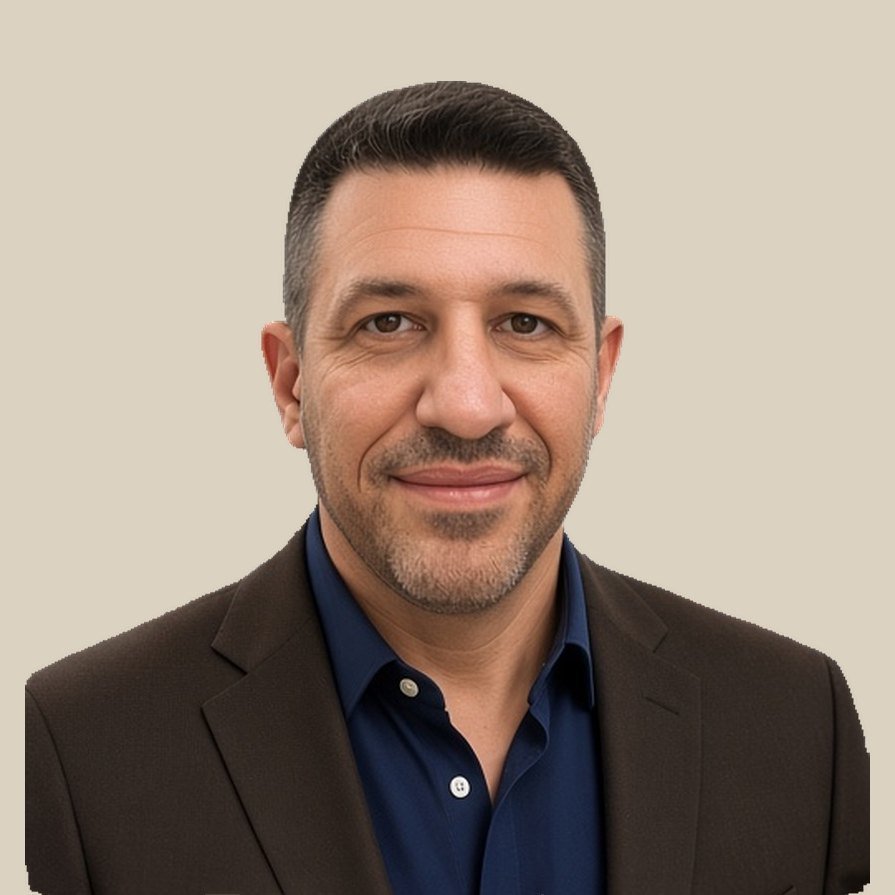
Written by Kenneth M. Adler
Every page on this site is written and maintained by me: the same person who answers the phone, runs your numbers, and handles your file start to finish. No call center, no hand-offs, no lead-selling. More about how I work →
Rather talk about your own situation?
Leave your number and I’ll call you back to go through your home and your plans, not the general debate.
- A call back within minutes during California business hours
- Your figures in writing before you commit to anything
- If it is the wrong tool for you, I will say so
Want your numbers instead of the noise?
I’ll run your actual figures, with every cost line by line, and tell you plainly if a reverse mortgage isn’t the right move for you.
(818) 674-7284Prefer email?
A couple of sentences about your home and your goal is enough. I reply personally, usually the same business day.
Contact Ken