Reverse mortgage research, with sourcesWhat the retirement research actually found.
For decades the advice was simple: use the house last, if at all. Since 2012, peer-reviewed studies in the Journal of Financial Planning have tested that advice, and it has mostly not held up. Here are the studies, the numbers they produced, the assumptions behind them, and the part most summaries leave out: what changed when HUD tightened the program in 2017.
The short answer: peer-reviewed studies since 2012 have found that retirees who build home equity into the plan, most often by opening a HECM line of credit early and drawing on it after bad market years, generally met their spending goals more often, and left larger total estates, than retirees who waited to take out a reverse mortgage until the portfolio was gone. In Wade Pfau’s 2016 study, using home equity as a last resort produced the smallest improvement of any strategy tested. The results are illustrations under stated assumptions, and HUD’s October 2017 changes slowed the line-of-credit growth the early studies relied on.
Sources: Journal of Financial Planning (2012, 2016); Advisor Perspectives (2019); Pfau webinar slides (2022). Full list at the bottom of the page.
The studies that changed the advice
None of these authors sells reverse mortgages. They are planners and academics who set out to test a rule of thumb.
Sacks & Sacks, 2012
Barry and Stephen Sacks compared the conventional order, home equity only after the portfolio runs out, with drawing on a reverse mortgage line of credit in the years after the portfolio lost money. Coordinating the two sustained retirement income better. The title said it plainly: “Reversing the Conventional Wisdom.”
Salter, Pfeiffer & Evensky, 2012
John Salter, Shaun Pfeiffer and Harold Evensky tested a “standby” reverse mortgage line held as a ready reserve beside a portfolio, and found it reduced the risk of running out. A 2013 follow-up was titled “Increasing the Sustainable Withdrawal Rate Using the Standby Reverse Mortgage.”
Pfau, 2016
Wade Pfau ran 50,000 simulations of seven ways to handle home equity, from ignoring it to spending it first. His key theme: “there is great value for clients to open a reverse mortgage line of credit at the earliest possible age.” The smallest improvement came from the conventional last-resort approach; the largest came from opening the line at retirement and letting it grow, even when it was tapped last.
What the studies actually produced
Four figures that come up most, each with the assumptions printed underneath, because the assumptions are half the story.
In Pfau’s 2016 model, a retiree who ignored home equity met a 4% after-tax spending goal (a 5.33% pre-tax withdrawal, adjusted for inflation) for 30 years only about 40% of the time. Every home-equity strategy improved on that; the last-resort approach improved it least.
$1 million tax-deferred portfolio, $500,000 home, 25% tax rate, 50,000 simulations, late-2015 interest rates, pre-2017 HUD premiums.
In Pfau’s 2022 historical test, coordinated draws and tenure payments covered a couple’s spending in every historical period tested. Holding the HECM as a last resort covered it in 95%.
Couple aged 62; $870,000 invested; $435,000 home; current HUD premium structure.
In a 2019 example, a reverse mortgage left heirs $183,670 more in total, even though the loan balance grew to $633,784.
Retiree at 65; $1 million IRA; $200,000 home; 1966–1995 market history.
In Pfau’s 2019 example, borrowing capacity (the principal limit) of $102,500 at 62 grew to $351,544 by 90, before upfront costs. A loan opened at 90 instead offered $284,222.
$250,000 home growing 2% a year; 4.5% growth rate (2019 interest rates plus today’s 0.50% annual premium); upfront costs not deducted.
Pfau’s 2022 historical case, strategy by strategy
| Strategy | Spending goal met | Median net legacy | Worst-case net legacy |
|---|---|---|---|
| HECM held as a last resort | 95.0% | $902,396 | −$145,447 |
| Tenure payments | 100.0% | $1,093,850 | $140,600 |
| Coordinated draws | 100.0% | $988,320 | $26,471 |
| Coordinated draws with voluntary repayments | 100.0% | $977,700 | $26,471 |
Assumptions: a couple, both 62 in 2022, already retired and planning to age 95; $870,000 invested ($260,000 taxable, $510,000 in an IRA, $100,000 in a Roth IRA); a $435,000 home with no mortgage; Social Security of $45,000 a year if claimed at 67; a $66,000 inflation-adjusted pre-tax spending goal plus $10,000 a year through age 74; HECM upfront costs of $18,600 financed and a 2.125% lender’s margin; historical market data. “Net legacy” is Pfau’s measure of what is left after the loan is repaid. The negative worst case is shown as published; it is not a debt passed to heirs, because a HECM is non-recourse. Source: Pfau, Financial Experts Network webinar slides, April 19, 2022, presenting the third edition of his book. Hypothetical illustration; not a projection of your results.
The inheritance question, measured properly
The most common objection I hear from adult children is that a reverse mortgage eats the inheritance. Pfau’s answer is that the question is usually measured on the wrong asset. “In isolation, reverse mortgages can look expensive,” he wrote in 2019. “But reverse mortgages should not be viewed in isolation.”
What heirs receive is everything left, the house and the investments together, not just the equity in the house.
His example followed a retiree through the 1966–1995 markets, the stretch behind the original 4% rule. With a reverse mortgage opened at 74, the loan balance grew to $633,784, nearly ten times what was drawn. Yet the total left for heirs was $183,670 larger than without it, because the portfolio was spared one large withdrawal right after the 1973–74 losses and had time to recover.
“If heirs wish to keep the home, they could repay the loan balance and still have $183,670 more left over…” What heirs actually face, for adult children →
Source: Pfau, “What the Critics Get Wrong About Reverse Mortgages”, Advisor Perspectives, April 15, 2019. One historical period, one set of assumptions ($1 million IRA, $200,000 home, retirement at 65); a different sequence of returns produces a different answer.
What changed in 2017, and why it matters
For loans with FHA case numbers assigned on or after October 2, 2017, HUD changed the program: the upfront FHA insurance premium became a flat 2% of the home’s value up to the FHA limit (it had been 0.5% or 2.5%, depending on whether first-year draws exceeded 60% of the principal limit), the annual premium fell from 1.25% to 0.50% of the balance, and the principal limit factors that set how much can be borrowed were lowered (HUD Mortgagee Letter 2017-12).
Because an unused line grows at the loan’s interest rate plus the annual premium, the lower premium also slowed line growth. Pfau’s own assessment (Forbes, January 23, 2019): “A round of such limitations came into effect in October 2017 and have weakened the case for the growing line of credit, though value still exists for these strategies.” In a later interview he called paying off a traditional mortgage the “marquee” use, “because it’s what’s used most commonly in practice,” while his post-2017 examples still found coordinated use ahead of the last-resort approach.
Two practical consequences. Anything you read that quotes a 1.25% annual premium, LIBOR, or a lending limit of $625,500 describes a program that no longer exists; the 2026 HECM limit is $1,249,125. And today’s higher interest rates cut both ways: they lower how much you can borrow at the start, and they make an unused adjustable-rate line grow faster. How pricing works →
The fine print that makes the research honest
These are illustrations
Every number above comes from a model or a historical replay with stated assumptions. Change the assumptions and the numbers move. None is a projection for your home.
The house has to matter
Pfau’s 2022 summary: the HECM “helps middle class: more benefits when home value is large relative to portfolio size.” If your home is small next to your portfolio, the gains shrink.
Costs are real
Upfront FHA insurance, origination and closing costs, plus interest on whatever is drawn. Pfau is blunt: “Reverse mortgages and life insurance are both expensive.” Most of the studies count the benefit net of those costs, not instead of them.
The rules still apply
You must live in the home and keep property taxes, homeowner’s insurance and maintenance current. The strategies assume an adjustable-rate HECM, whose unused line of credit grows; a fixed-rate HECM has no line, and proprietary programs vary.
Sources: Pfau, Financial Experts Network webinar slides, 2022; Retire With Style podcast, episode 214, February 3, 2026.
Short quotes, dated and linked
Read them in full at the source; short quotes are no substitute for the papers.
“It’s not for when you run out of money. It’s to be used strategically throughout the entire process.”
Wade Pfau, PhD, CFA, RICP®, interviewed by HECMWorld, October 8, 2026
“The punchline is always getting that line of credit opened as soon as possible and … allowing it to grow over time.”
Wade Pfau, HECMWorld, October 8, 2026
“A key theme is that there is great value for clients to open a reverse mortgage line of credit at the earliest possible age.”
Wade Pfau, Journal of Financial Planning, April 2016
“…the line of credit will continue to grow without regard for the home’s subsequent value.”
Wade Pfau, Advisor Perspectives, December 9, 2014
“In isolation, reverse mortgages can look expensive… But reverse mortgages should not be viewed in isolation.”
Wade Pfau, Advisor Perspectives, April 15, 2019
“Distributions from the HECM are not included in the Adjusted Gross Income, which may help with tax bracket management and may impact the taxation of other government benefits in retirement.” How that applies to you is a question for your CPA.
Wade Pfau, Journal of Financial Planning, April 2016
The researchers quoted are not affiliated with Ideal Financial, Inc. and have not reviewed or endorsed this page or any loan program. The October 2026 interview appeared on HECMWorld, an industry publication. For the skeptical view, read the Consumer Financial Protection Bureau’s 2017 issue brief on using a reverse mortgage to delay Social Security, and my page on both sides of that question.
Questions people ask about the research
Does research really support reverse mortgages, or is this industry marketing?
Who is Wade Pfau?
Do these results apply to my situation?
Did the 2017 rule changes undo the research?
Why does the research focus on the line of credit rather than a lump sum?
Where can I read the studies myself?
Sources
- Barry H. Sacks and Stephen R. Sacks, “Reversing the Conventional Wisdom: Using Home Equity to Supplement Retirement Income”, Journal of Financial Planning, February 2012.
- John R. Salter, Shaun A. Pfeiffer and Harold R. Evensky, “Standby Reverse Mortgages: A Risk Management Tool for Retirement Distributions”, Journal of Financial Planning, August 2012.
- Shaun Pfeiffer, John R. Salter and Harold R. Evensky, “Increasing the Sustainable Withdrawal Rate Using the Standby Reverse Mortgage”, Journal of Financial Planning, December 2013.
- Wade D. Pfau, interviewed on the Howard Bailey podcast, episode 11 (undated; on refinancing as the “marquee” use).
- Wade D. Pfau, “Incorporating Home Equity into a Retirement Income Strategy”, Journal of Financial Planning, April 2016.
- Wade D. Pfau, “The Hidden Value of a Reverse Mortgage Standby Line of Credit”, Advisor Perspectives, December 9, 2014.
- Wade D. Pfau, “Advisors Need a Fresh Look at Reverse Mortgages”, Advisor Perspectives, December 1, 2015.
- Wade D. Pfau, “Fitting Home Equity into a Retirement Income Strategy”, presentation slides, National Reverse Mortgage Lenders Association (2015–2016).
- Wade D. Pfau, “Why Open a Reverse Mortgage Before It Is Actually Needed?”, Forbes, January 23, 2019.
- Wade D. Pfau, “What the Critics Get Wrong About Reverse Mortgages”, Advisor Perspectives, April 15, 2019.
- Wade D. Pfau, Reverse Mortgages: How to Use Reverse Mortgages to Secure Your Retirement, 3rd ed., Retirement Researcher Media, 2022.
- Wade D. Pfau, “How to Use Reverse Mortgages to Secure Your Retirement”, Financial Experts Network webinar slides, April 19, 2022.
- Retire With Style podcast, episode 214, February 3, 2026.
- HECMWorld, “Dr Wade Pfau: Why Reverse Mortgages Should Be Part Of Retirement Planning, Not A Last Resort”, October 8, 2026.
- HUD Mortgagee Letter 2017-12, August 29, 2017.
- Consumer Financial Protection Bureau, “The costs and risks of using a reverse mortgage to delay collecting Social Security”, August 24, 2017.
Quotes on this page are reproduced briefly for commentary, with attribution and links. The authors and publishers retain all rights.
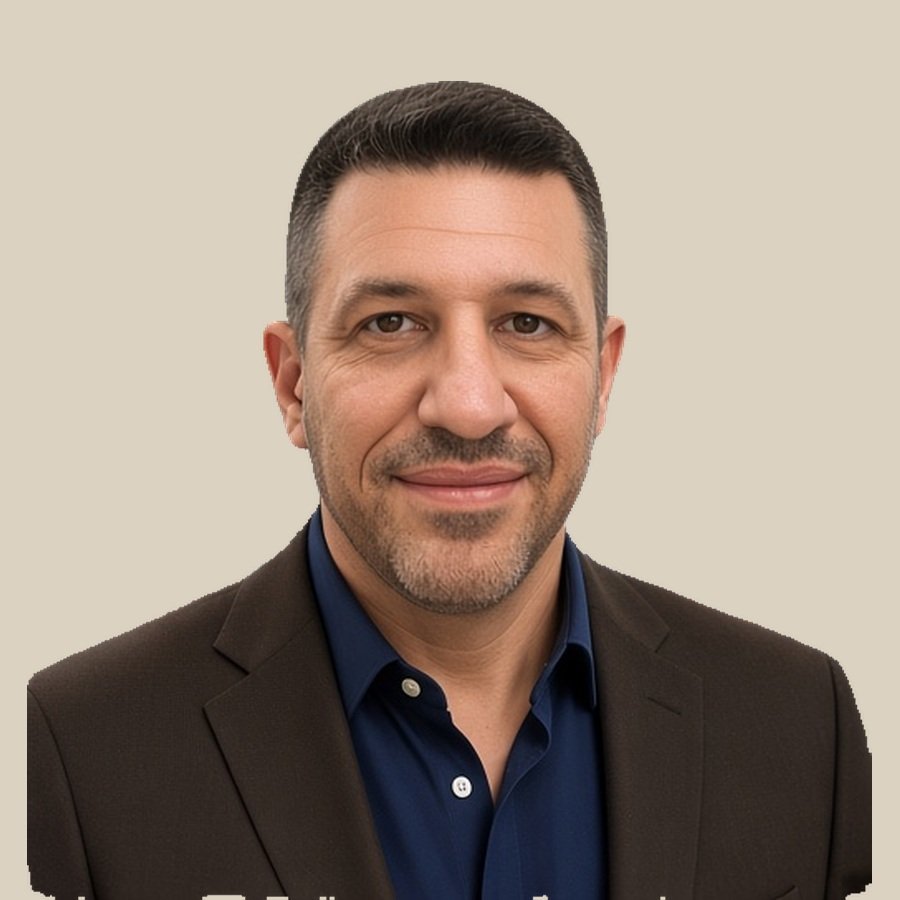
Written by Kenneth M. Adler
Broker & Owner, Ideal Financial, Inc. · 30 years in California lending · NMLS #240317 · CA DRE #01216608
Published October 8, 2026 · Last reviewed October 8, 2026
Every page on this site is written and maintained by me: the same person who answers the phone, runs your numbers, and handles your file start to finish. No call center, no hand-offs, no lead-selling. More about how I work →
The rest of the reverse mortgage library
Each page below covers one decision in full, rather than a paragraph of it. Start wherever your question is.
Want your own numbers run?
The studies show direction. Your file shows dollars. I will put your figures in writing, including the version where the answer is no.
- Written analysis, not a sales sheet
- Happy to include your advisor or CPA
- No obligation
Fifteen minutes. Real numbers. Then you decide.
Tell me the scenario and I’ll tell you honestly whether this is the right tool. If it isn’t, you’ll leave the call knowing why, and I’ll point you at whatever is.
(818) 674-7284Prefer email?
Send a couple of sentences about your situation and I’ll reply personally, usually the same business day.
Contact Ken Book a 30-minute call