Reverse mortgage retirement strategiesHow retirement planners actually use a reverse mortgage.
Most people still picture a reverse mortgage as the thing you do when everything else has run out. The retirement-income research pictures something else: a tool set up early, used deliberately, and coordinated with the investment portfolio. Below are the seven uses that show up in that research and in my files, what each one actually does, and when each one is the wrong move.
The short answer: retirement planners use a reverse mortgage in seven main ways: to retire a mortgage payment, as a buffer so investments aren’t sold in down markets, as a standby line of credit that grows, as monthly income for as long as you live in the home, as a bridge while Social Security grows, to manage taxable income, and to buy the next home. Among HECMs, the growing line of credit exists only on the adjustable-rate version; proprietary programs vary. Each use works best inside a written plan with your financial advisor and CPA, and none of them removes your obligation to pay property taxes, insurance and upkeep.
Uses summarized from Wade Pfau’s published framework (NRMLA presentation, 2015–2016; Financial Experts Network webinar, 2022) and the Journal of Financial Planning studies on the research page.
Seven uses, from most common to most strategic
The first is what most people call about. The next three are what the planning research is about. The last three each have a page of their own.
Retire the mortgage payment
This is the most common reason people call me, and in a later interview retirement researcher Wade Pfau called it the “marquee” use, “because it’s what’s used most commonly in practice.” Paying off an existing mortgage with a reverse mortgage ends the required monthly principal and interest payment. Interest and FHA mortgage insurance accrue on the balance instead, which grows over time and is repaid when the loan ends. Property taxes, insurance and upkeep stay yours.
Pfau lists it first among what he calls “portfolio/debt coordination for housing,” alongside HECM for Purchase and funding renovations so you can age in place.
The planning point is what that payment was costing the portfolio. A payment funded from an IRA has to be grossed up for tax: at a 24% combined tax rate, $27,600 a year of mortgage payments takes roughly $36,300 a year of IRA withdrawals to cover. Remove the payment and those withdrawals, and the tax on them, go away.
For some households, removing that payment can matter more to how long the plan lasts than fine-tuning investments; your advisor can test that with your numbers. Run the calculator to see whether a payoff fits on your home.
Illustration only; your tax rate and figures will differ. Sources: Pfau, NRMLA presentation slides (“Spectrum of Potential Reverse Mortgage Uses”); Pfau, Financial Experts Network webinar, April 19, 2022.
A buffer for bad markets
The order of returns matters as much as the average. Selling investments after a crash to pay the bills locks in losses that the recovery never gets to repair. Planners call it sequence-of-returns risk, and it is the problem the reverse mortgage research has studied most.
The idea in one picture
In years when the portfolio is down, spending comes from the HECM line of credit instead, so nothing is sold low. When the portfolio recovers, withdrawals resume from it, and the line can be paid back voluntarily so it is ready, and growing, for the next downturn.
Pfau’s simple rule, step by step
Write down one number when you retire
The value of the investment portfolio on the day you retire. In Pfau’s description of the rule: “when you retire, just record the value of your investment assets.”
Check it before each year’s withdrawals
“If the current value of your investment assets is less than where you started, that would be the time to tap into the HECM.” That year’s spending comes from the line, and the portfolio is left alone to recover.
Go back to the portfolio when it recovers
Once the portfolio is back above its starting value, spending comes from investments again.
Pay the line back when it makes sense
Voluntary repayments are allowed at any time without penalty. On an adjustable-rate HECM, what you repay becomes available to draw again and resumes growing, which rebuilds the buffer for the next downturn. Pfau’s research tested this version as well: coordinated spending with voluntary repayments.
Why not just keep a cash cushion?
You can, and many plans do. Pfau names three “buffer assets” that sit outside the portfolio: cash, the cash value of permanent life insurance, and “the growing line of credit on a variable rate Home Equity Conversion Mortgage…” He is candid about the trade-off: “Reverse mortgages and life insurance are both expensive.” The case for them is the relief they give the portfolio in bad years.
A line of credit also does two things a cash bucket can’t: it doesn’t have to be carved out of the portfolio up front, and its unused portion grows while it waits.
How much to spend, and from where, is an investment-policy decision for you and your financial advisor; I don’t give investment advice. Sources: HousingWire, April 10, 2025 (the simple rule); Retire With Style podcast, episode 214, February 3, 2026 (buffer assets); Pfau, Financial Experts Network webinar, 2022 (voluntary repayments). The research numbers are on the research page.
A standby line that grows, and can’t be frozen or cut because home values fall
Pfau lists preserving the line of credit, as a kind of insurance, among the main uses. The line is the policy; these are the things it insures against. It stays available while the loan is in good standing; draws end if the loan becomes due, for example over unpaid property taxes or insurance, or after the last borrower leaves.
It grows while you wait
The unused part of a HECM line grows at the loan’s interest rate plus the 0.50% annual FHA insurance premium, by contract. In a 2019 example using today’s 0.50% premium but 2019 interest rates, Pfau showed $102,500 of borrowing capacity at 62 growing to $351,544 by 90, before upfront costs. Waiting until 90 to open one produced $284,222, even though the house was worth $435,256 by then. Compare now vs. later on your home →
It doesn’t care what the house is worth
Pfau, writing in 2014: the line of credit “will continue to grow without regard for the home’s subsequent value.” His slides call the HECM a “put option” on the home. If prices fall, the line is still there, still growing, and still yours to draw; a bank HELOC can be frozen or cut when values drop, as lenders did in 2008. How the two compare →
It’s there when life happens
A contingency fund for in-home care, health costs, a new roof, or a market year you’d rather not sell into. One less-known use from Pfau’s list: paying the premiums on a long-term care policy you already own, so a policy you’ve paid into for years doesn’t lapse when the budget gets tight.
Growth depends on the loan’s interest rate and stops when the line is used or the loan ends; it is a contract feature, not an investment return. Pfau also notes that HUD’s October 2017 changes “weakened the case for the growing line of credit,” which is why I show the numbers both ways before anyone opens one. Sources: Pfau, “Why Open a Reverse Mortgage Before It Is Actually Needed?” (Forbes, January 23, 2019); Pfau, “The Hidden Value of a Reverse Mortgage Standby Line of Credit” (Advisor Perspectives, December 9, 2014); Pfau, NRMLA presentation slides.
Monthly income for as long as you live in the home
A HECM can pay a fixed amount every month for as long as at least one borrower lives in the home as a primary residence, even after the loan balance passes the home’s value. Pfau lists “tenure payments as annuity alternative” among the planning uses: the house provides a monthly income floor, so less of the portfolio has to be turned into one.
- Payments continue only while a borrower lives in the home. A permanent move, including more than 12 consecutive months away for health reasons, ends them.
- The payment is level; it does not rise with inflation.
- Only borrowers are paid. An eligible non-borrowing spouse can stay in the home but receives no further payments.
- A smaller tenure payment can be combined with a line of credit (a “modified tenure” plan) to keep a reserve.
Nothing is purchased. This is a loan feature, not an annuity, and California law prohibits requiring an annuity purchase to get a reverse mortgage, and bars referring a borrower to buy an annuity or other financial or insurance product before closing or before the right to cancel expires (Cal. Civ. Code §1923.2); federal law bars requiring any insurance, annuity or similar product for a HECM (12 U.S.C. §1715z-20(o)). I don’t sell annuities, investments or insurance.
The monthly amount depends on age, rates and home value, and it appears in every written proposal I prepare. Tenure payments require the adjustable-rate HECM.
Three uses with pages of their own
Each of these deserves more than a paragraph, so each has its own page with the details and the cautions.
A bridge to a bigger Social Security check
Draws cover the years between 62 and 70 so the check is about 77% larger for life, and a married couple’s survivor keeps the larger one. It can pay off, but the CFPB found that, in general, the loan costs exceed the extra lifetime Social Security income. Both sides, in full →
Spending that isn’t taxable income
Loan advances aren’t income, so they generally don’t count toward the MAGI that sets Covered California subsidies before 65 and Medicare premiums after, and they can pay the tax on a Roth conversion without adding more taxable income. The tax page →
The next home, without a payment
HECM for Purchase buys the single-story home, or the one near family, with roughly 55 to 70 percent down depending on age, plus closing costs, and no required monthly principal and interest payment. How H4P works →
Who benefits most
Pfau’s 2022 summary of his research put it in one line: the HECM “helps middle class: more benefits when home value is large relative to portfolio size.”
That describes a great many California households, where the house has quietly become the largest asset on the balance sheet and the portfolio is asked to carry everything else.
- You plan to stay in the home for the long term.
- Your home equity is large compared with your investments.
- You would otherwise be selling investments in bad years, or carrying a mortgage payment into retirement.
- You have, or will build, a written plan with an advisor, and the line would be used by a rule.
When it’s the wrong tool
This page sits on a reverse mortgage broker’s website, so read this section twice.
You’ll move within a few years
Upfront costs need years to earn out. On a short horizon a HELOC, or simply waiting, is usually cheaper.
Taxes and insurance are already a stretch
The obligations don’t go away. Falling behind on property taxes, insurance or upkeep can make the loan due.
The money would just get spent
A growing line is an asset only if it’s used by a rule. If it would become extra spending money, the plan gets worse, not better.
Someone not on the loan must stay
Only an eligible non-borrowing spouse is protected. An adult child living in the home has no right to stay after the last borrower leaves.
In every case the borrower remains responsible for property taxes, homeowner’s insurance, and home maintenance. Failing those obligations can make the loan due and payable.
Questions people ask about these strategies
Do I need a financial advisor to use a reverse mortgage this way?
Which of these strategies need the adjustable-rate HECM?
Can I pay the line of credit back and use it again?
Is a tenure payment the same as an annuity?
Do jumbo reverse mortgages work for these strategies?
Isn’t this just the reverse mortgage industry’s marketing?
Sources
- Wade D. Pfau, “Fitting Home Equity into a Retirement Income Strategy”, presentation slides, National Reverse Mortgage Lenders Association (2015–2016).
- Wade D. Pfau, “How to Use Reverse Mortgages to Secure Your Retirement”, Financial Experts Network webinar slides, April 19, 2022.
- Wade D. Pfau, “Why Open a Reverse Mortgage Before It Is Actually Needed?”, Forbes, January 23, 2019.
- Wade D. Pfau, “The Hidden Value of a Reverse Mortgage Standby Line of Credit”, Advisor Perspectives, December 9, 2014.
- Wade D. Pfau, interviewed on the Howard Bailey podcast, episode 11 (undated): refinancing a traditional mortgage as the “marquee” use.
- “Wade Pfau: how market volatility could renew reverse mortgage discussions”, HousingWire, April 10, 2025.
- Retire With Style podcast, episode 214, February 3, 2026.
- California Civil Code §1923.2 (no requirement to buy an annuity to get a reverse mortgage, and no referral to buy an annuity or other financial or insurance product before closing or before the right to cancel expires); 12 U.S.C. §1715z-20(o) for the federal rule.
Dr. Pfau and the other researchers cited are not affiliated with Ideal Financial, Inc. and have not reviewed or endorsed this page or any loan program. Quotes are from their published work and interviews; read them in full at the source.
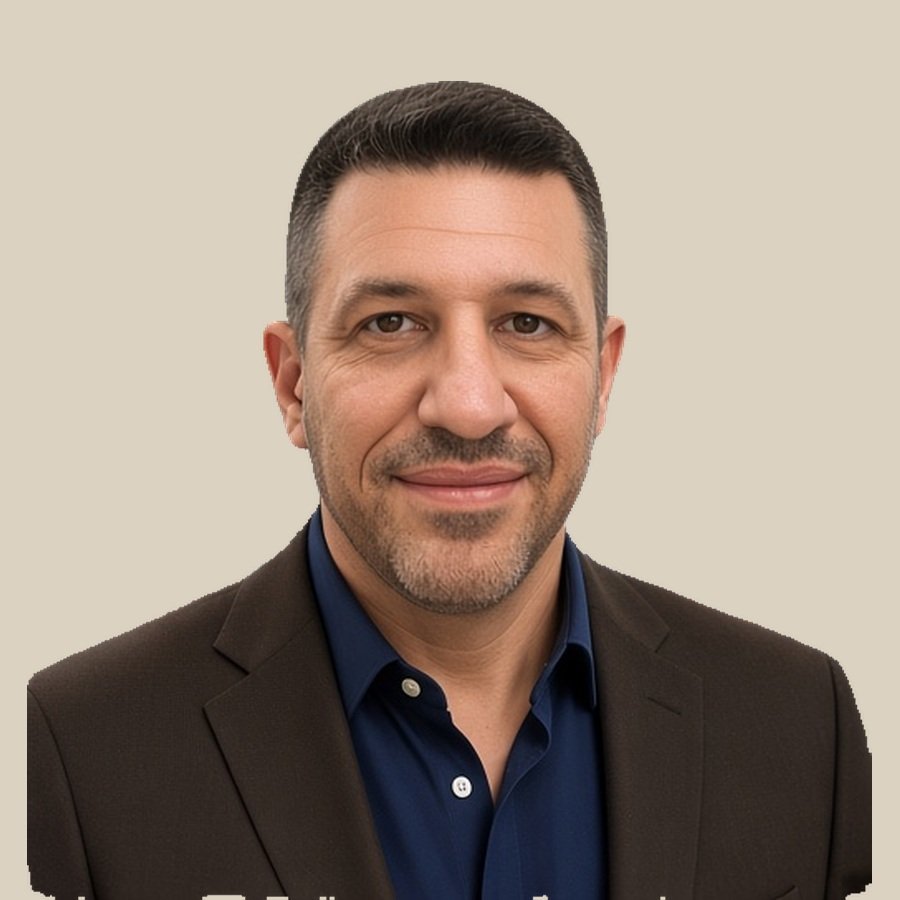
Written by Kenneth M. Adler
Broker & Owner, Ideal Financial, Inc. · 30 years in California lending · NMLS #240317 · CA DRE #01216608
Published October 8, 2026 · Last reviewed October 8, 2026
Every page on this site is written and maintained by me: the same person who answers the phone, runs your numbers, and handles your file start to finish. No call center, no hand-offs, no lead-selling. More about how I work →
The rest of the reverse mortgage library
Each page below covers one decision in full, rather than a paragraph of it. Start wherever your question is.
Want to see which of these fits your plan?
Fifteen minutes and real figures usually narrows seven uses down to one or two, or to none, and I will tell you which.
- Your numbers, not a generic illustration
- Happy to include your advisor or CPA
- No obligation
Fifteen minutes. Real numbers. Then you decide.
Tell me the scenario and I’ll tell you honestly whether this is the right tool. If it isn’t, you’ll leave the call knowing why, and I’ll point you at whatever is.
(818) 674-7284Prefer email?
Send a couple of sentences about your situation and I’ll reply personally, usually the same business day.
Contact Ken Book a 30-minute call